
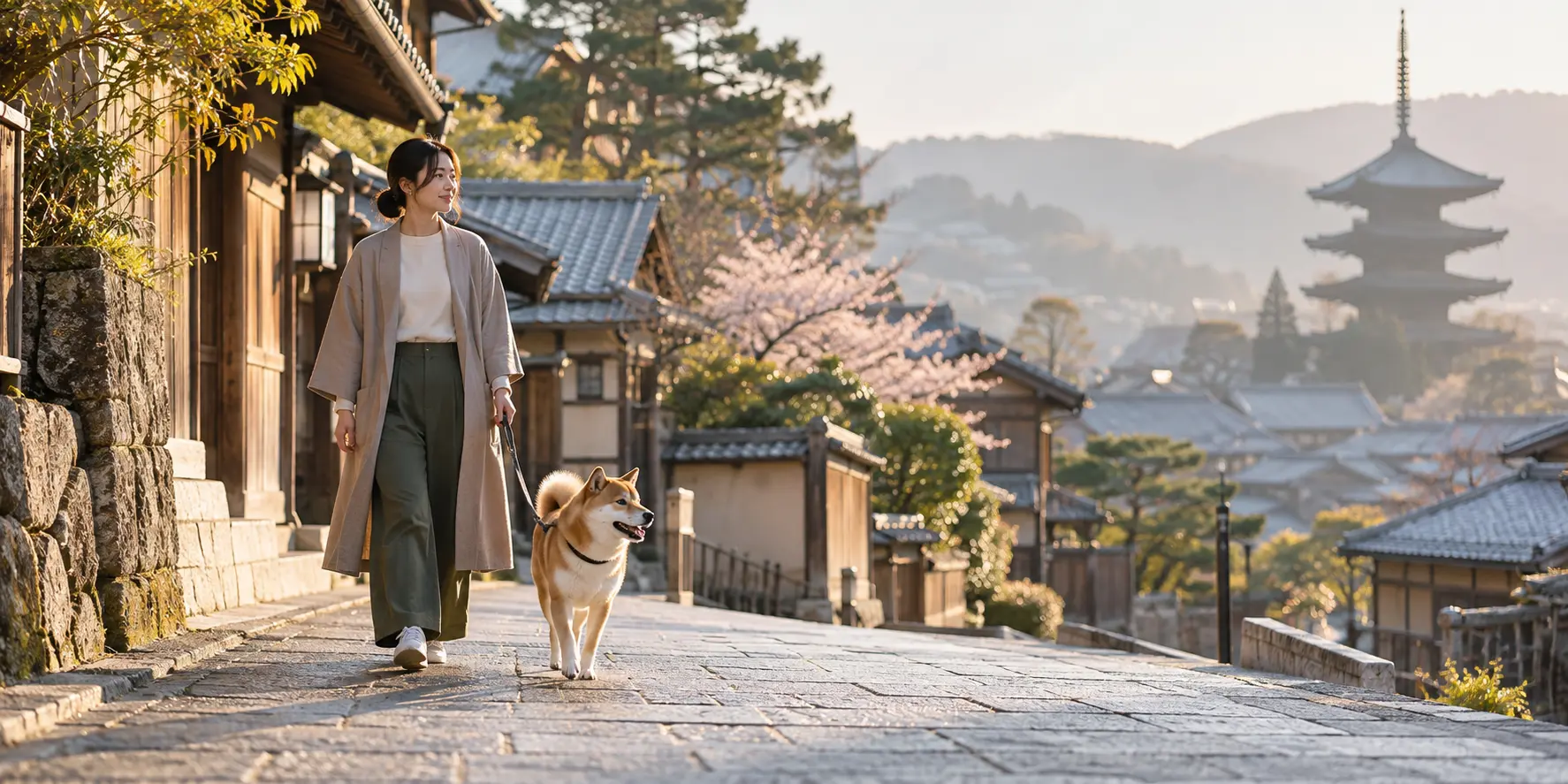
Dogs of the world · East Asia
Dogs of Japan: Shiba Inu history, independence and urban ownership
Discover the Shiba Inu's Japanese history, independent temperament, grooming, recall challenges and the realities of raising one in a modern Japanese home.
The country and the dog
Breed history becomes useful when it changes the ownership decision.
Japan combines dense urban neighbourhoods, compact homes, seasonal heat, humid summers, public transport and a strong culture of careful daily routines. A Shiba Inu can look perfectly suited to a small home because of its size, yet its independence, alertness and escape ability require more planning than the photograph suggests.
The Shiba Inu is a Japanese native breed with a distinctive character. Many owners value its cleanliness, expression and spirited personality. Others are surprised by selective listening, sensitivity to handling, dog-to-dog preferences and a strong desire to control distance. Respectful training works better than expecting a small dog to behave like a compliant one.
Breed story
Shiba Inu
Origin: Japan
Shiba Inu ancestors were used in Japan for hunting in varied terrain. The modern breed retains athleticism, alertness and a degree of independence. Its compact body does not mean it is a decorative apartment accessory. It still needs movement, investigation, training and a secure relationship with its owner.
The breed's clean appearance can also hide seasonal shedding. Grooming, household cleaning and skin care should be part of the plan. A Shiba's famous expression is not a reliable measure of how it feels, so owners need to learn canine body language and cooperative handling.
Japan ownership planning
Compact homes and calm routines
A Shiba may live successfully in a smaller home when daily walks, sniffing, enrichment, quiet rest and safe toilet arrangements are realistic. The building's stairs, lifts, noise, balcony safety, nearby routes and pet rules matter more than square metres alone.
Owners should plan for humid summers, hot pavement and indoor cooling. A small dog can still overheat, and dense urban routes can be stressful if the dog has not been gradually introduced to bicycles, crowds, construction noise and other animals.
Japan ownership planning
Recall, handling and the escape problem
Independent dogs need excellent management. Secure harnesses, gates, doors, identification and careful lead practice are important because a Shiba that slips away may not return simply because it knows its name. Recall training is worthwhile, but it should not be the only safety plan.
Cooperative care can make grooming, nail care, veterinary handling and travel easier. Short, positive sessions are usually more productive than forcing a dog through a difficult interaction.
Japan ownership planning
Who the breed may suit
A Shiba can suit an observant owner who enjoys a dog with opinions and is willing to learn. It may frustrate someone who wants guaranteed off-lead freedom, instant obedience or a dog that welcomes every person and dog. The individual temperament must be assessed honestly.
Continue researching
Use this story as a map, then verify the details that can change.
Breed history and general ownership guidance can help a reader ask better questions. Laws, entry rules, transport policies, prices and health decisions need current official or professional confirmation for the exact dog, household and route.