
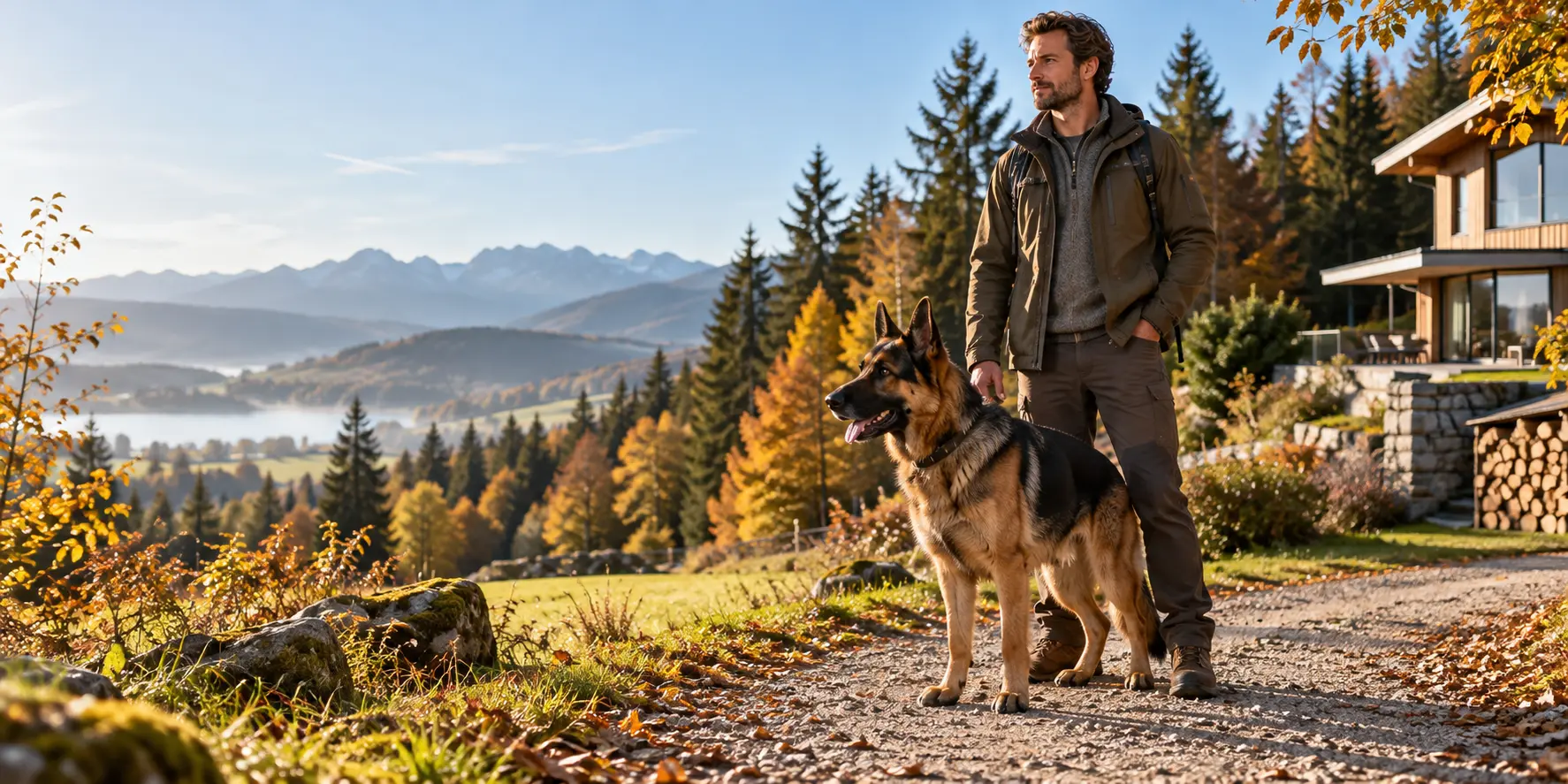
Dogs of the world · Central Europe
Dogs of Germany: German Shepherd history, training and responsible ownership
Explore the German Shepherd Dog's German working history, training needs, health planning, family suitability and the importance of choosing a stable individual.
The country and the dog
Breed history becomes useful when it changes the ownership decision.
Germany's dog landscape includes dense cities, forests, village roads, public transport and strong expectations around responsible control. The German Shepherd Dog is one of the country's most recognisable breeds, but its reputation has become so broad that it can hide the difference between a stable companion, a working prospect and a dog whose needs exceed the household's experience.
A German Shepherd is intelligent, athletic and often deeply connected to its handler. That can be a wonderful foundation for training and companionship. It also means poor breeding, inconsistent socialisation, isolation or harsh handling can have serious consequences. The best profile is about the dog in front of you, not a heroic image of the breed.
Breed story
German Shepherd Dog
Origin: Germany
The breed was developed in Germany as a versatile herding and working dog. Its working history explains the combination of movement, attention, courage and responsiveness that many owners admire. It also explains why a German Shepherd usually needs a job-like structure even when the job is family life, scent work, obedience or assistance-style tasks.
Health screening, sound movement and stable temperament should be central when choosing a dog. No breed label can guarantee health or behaviour, and a puppy should not be selected only for colour, size or an intimidating appearance.
Germany ownership planning
Training should build trust and control
German Shepherds benefit from clear household rules, reward-based learning, calm exposure and a strong foundation in recall, lead walking, handling and settling. Protection-style games and defensive training should not be improvised by inexperienced owners.
A dog that is physically tired but emotionally overwhelmed is not necessarily well exercised. Owners should measure success by calmness, recovery and safe behaviour as well as distance walked.
Germany ownership planning
German housing and public-space reality
Local rules, landlord terms, insurance, public transport and dog-control expectations all need to be checked for the actual city. A large dog may need more space, but good management and a thoughtful routine matter just as much. Secure travel and access to a veterinarian should be planned before the dog arrives.
Owners moving across borders should separate general breed information from current import, vaccination and carrier requirements. Those details change and should be checked through official authorities.
Germany ownership planning
A family dog with serious physical presence
A stable German Shepherd can be a loyal family companion, but adults must supervise interactions, protect the dog's rest and teach children respectful boundaries. Households wanting a low-effort, naturally easy dog should look elsewhere.
Continue researching
Use this story as a map, then verify the details that can change.
Breed history and general ownership guidance can help a reader ask better questions. Laws, entry rules, transport policies, prices and health decisions need current official or professional confirmation for the exact dog, household and route.