
Dogs of the world · North America
Dogs of Canada: Newfoundland history, size, water work and family life
Learn how the Newfoundland developed in Canada, what its gentle reputation means in practice, and how owners should plan for size, coat, heat, transport and veterinary care.
The country and the dog
Breed history becomes useful when it changes the ownership decision.
Canada's geography makes regional planning essential. A Newfoundland living near a cool lake, a heated apartment in Toronto, a rural property or a coastal town may have the same breed label but a very different daily experience. Snow, ice, summer heat, stair access, car space and veterinary distance all matter.
The Newfoundland is known for a powerful combination of size, strength, water ability and a generally gentle companion reputation. That reputation should not hide the practical work. A giant dog needs space to turn around comfortably, careful growth and weight management, grooming, transport planning and owners who can handle emergencies.
Breed story
Newfoundland
Origin: Newfoundland and Labrador, Canada
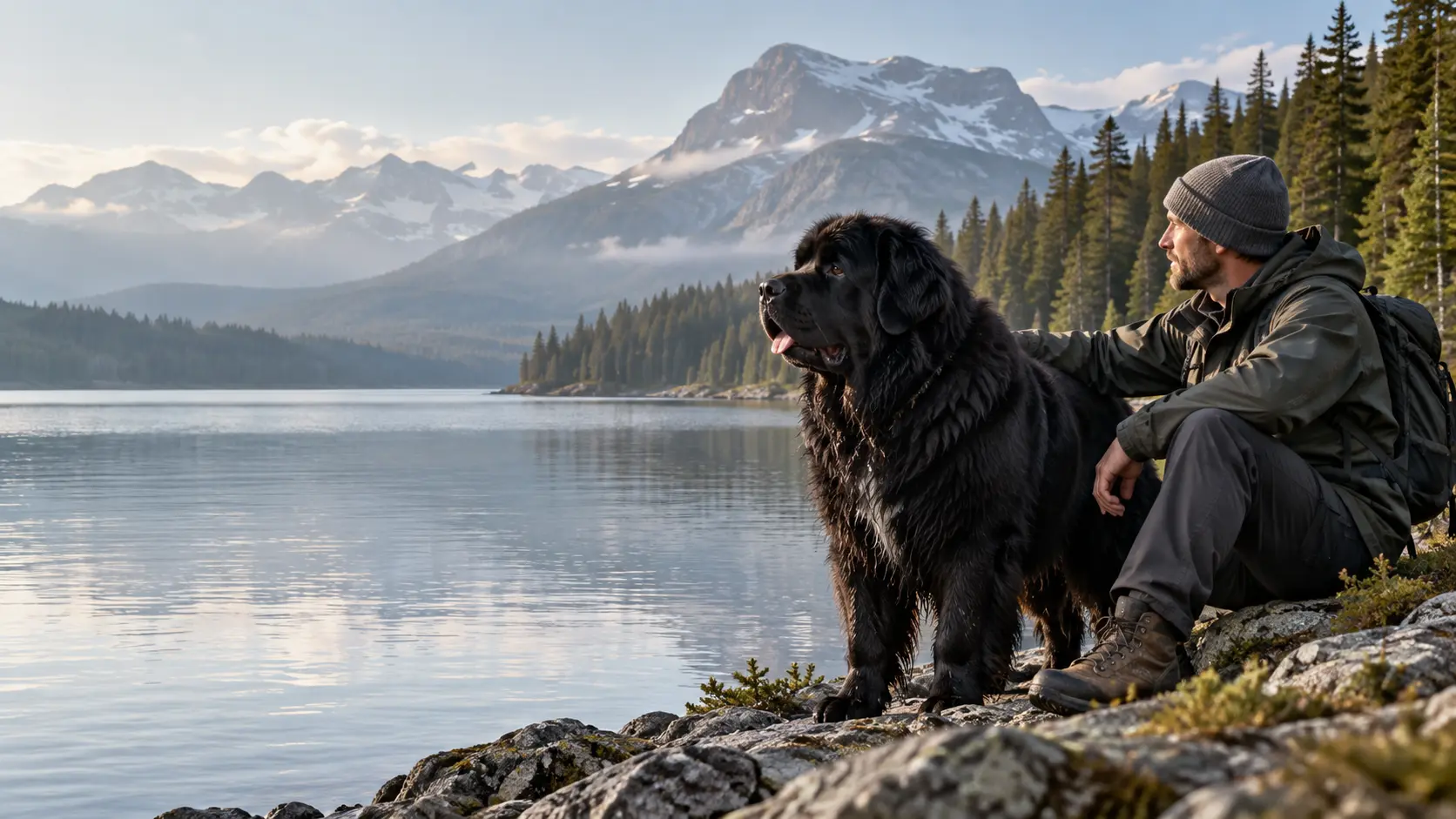
Newfoundlands were developed in Newfoundland and Labrador and became associated with water work, hauling and partnership with people. Their history is visible in their build and confidence around water, but individual dogs vary and not every Newfoundland should be pushed into swimming or cold-water activity.
A calm temperament is valuable in a family home, but size magnifies every behaviour. Jumping, pulling, doorway congestion and poor lead skills are harder to manage when the dog is enormous. Early cooperative training is a safety investment.
Canada ownership planning
Giant-breed planning before the puppy arrives
Owners should budget for food, preventive care, grooming, appropriate transport and the possibility of higher veterinary costs. Flooring, stairs, vehicle access, sleeping space and safe interaction with children are practical design questions, not minor details.
Growth should be managed with veterinary guidance. More food and more exercise are not automatically better for a growing giant breed. The household needs a slow, informed plan.
Canada ownership planning
Cold climate does not remove heat risk
A thick coat can be helpful in cold conditions but uncomfortable in warm weather. Summer walking, vehicle temperature, humidity and access to shade need as much attention as winter paw care and ice safety. Coastal and prairie conditions can feel very different.
Water should be treated as a safety subject. Swimming ability is not a guarantee, and large dogs still need supervision around water, docks, thin ice and strong currents.
Canada ownership planning
Family fit and everyday manners
A Newfoundland can be a deeply involved family companion when the household enjoys a slower, structured routine and is ready for grooming, drool, size and training. It is not a sensible choice for someone who wants a small, low-cost dog that can fit anywhere without preparation.
Continue researching
Use this story as a map, then verify the details that can change.
Breed history and general ownership guidance can help a reader ask better questions. Laws, entry rules, transport policies, prices and health decisions need current official or professional confirmation for the exact dog, household and route.