
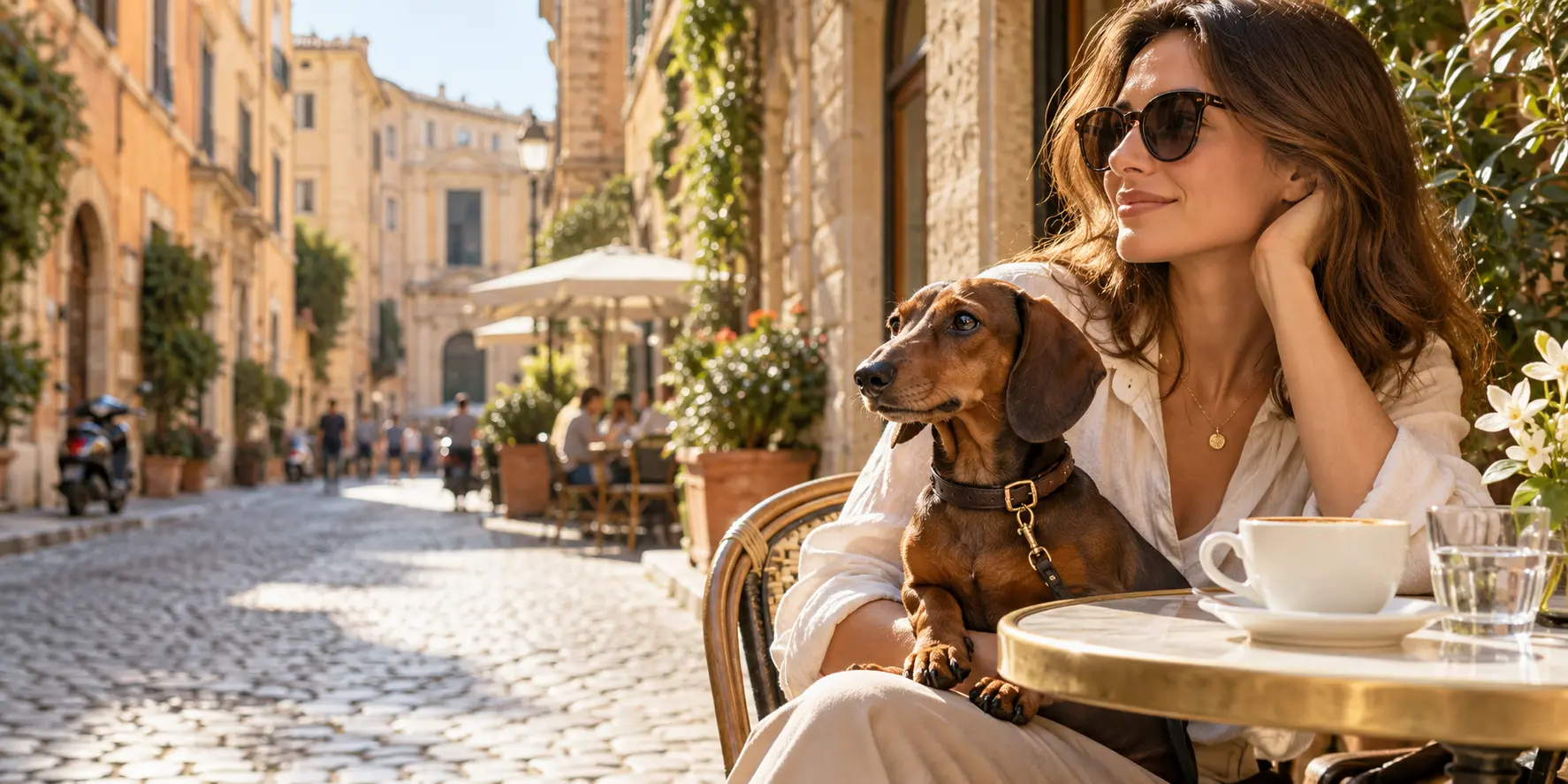
Dog-friendly cities · Rome, Italy
Living With a Dog in Rome: Historic Streets, Heat, Housing and Everyday Care
A Rome dog-owner guide covering apartment routines, hot streets, transport questions, historic-centre walking and practical planning for daily life.
A useful starting point
Good dog information makes the real decision easier.
Rome can be an engaging city for dogs and owners, with neighbourhood walks, outdoor life and a strong social rhythm. It also brings heat, stone pavements, traffic, scooters, stairs, crowded streets and buildings that were not designed around modern pet routines.
A good Roman dog routine balances exploration with quiet. A dog that joins a cafe or piazza outing may still need a shaded rest, shorter midday walks and a calm way to move through narrow or noisy streets.
Dog Haven Group planning guide
Historic streets and summer surfaces
Stone and asphalt can become uncomfortable in the heat. Walk when conditions are kinder, carry water and give the dog breaks away from the hottest surfaces. Small dogs and dogs with short coats are not automatically protected from heat, and large or thick-coated dogs may need even more adjustment.
Use the city as a gradual training environment. Scooters, crowds, outdoor dining, bells and narrow entrances can be introduced in small steps rather than treated as background noise every dog should tolerate immediately.
Dog Haven Group planning guide
Apartments, stairs and shared buildings
Check the rental agreement, condominium rules and lift arrangements. Consider whether the dog can manage stairs, whether neighbours will hear barking and how toilet breaks work during long workdays. A ground-floor home may solve one problem while creating another if it has poor shade or insecure access.
Make a quiet place inside the home and protect the dog's rest. City life should not mean constant participation in every outing.
Dog Haven Group planning guide
Public transport and local verification
Rules can vary by operator and service, so verify the current conditions before travelling. Carry the equipment the dog actually uses well, and practise short trips before relying on public transport for a long day. Local veterinary and emergency contacts should be stored with the travel documents.
Before you decide
Turn the information into a plan you can actually keep.
Use this checklist as a conversation starter with the people who share the home. The right dog is the one whose welfare can be supported consistently, including during the difficult weeks.
- 01
Plan summer walks around heat and pavement
- 02
Check written apartment and condominium rules
- 03
Practise calm exposure to traffic and crowds
- 04
Build quiet rest into social outings
- 05
Verify current transport and public-space rules
Keep exploring