
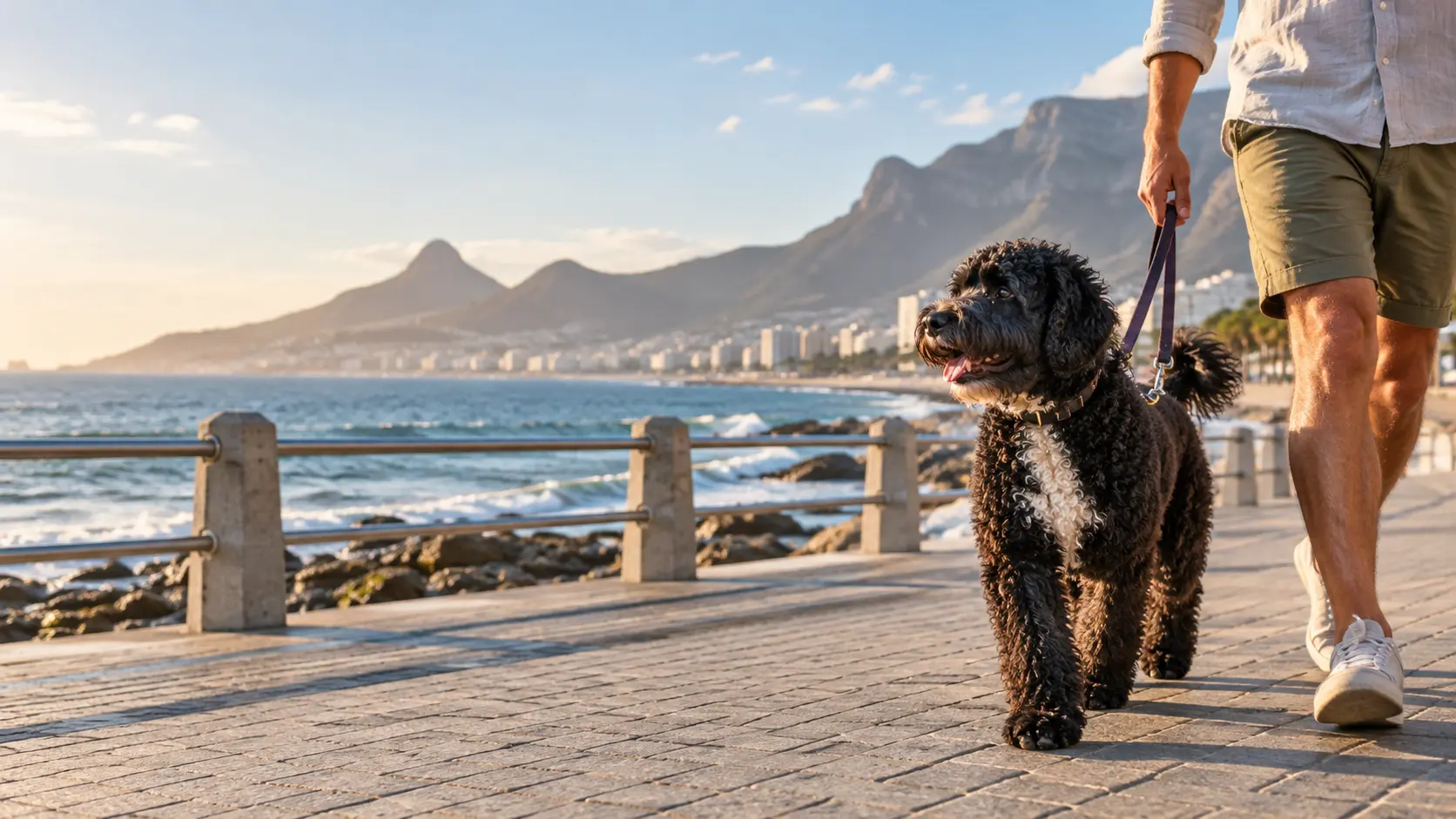
Dog-friendly cities · Cape Town, South Africa
Living With a Dog in Cape Town: Climate, Coastal Walks, Housing and Safety
Plan dog ownership in Cape Town with practical guidance on heat, coastal routes, secure homes, transport, neighbourhood routines and changing weather.
A useful starting point
Good dog information makes the real decision easier.
Cape Town offers beaches, mountain routes, suburban streets and varied neighbourhoods, but a dog-friendly life still depends on the exact home and routine. Heat, strong sun, wind, water, secure fencing, traffic and local access rules can change the experience from one suburb to the next.
Owners should think beyond the scenic walk. A dog needs safe transport, shade, water, identification, a secure home and a plan for days when heat, wind, fire risk or crowded routes make the usual outing unsuitable.
Dog Haven Group planning guide
Coastal beauty still needs heat planning
Early or late walks may be safer than midday exercise, especially on exposed pavement or sand. Carry water, check the surface with your hand and give the dog a shaded place to recover. Ocean access does not remove the need for supervision around currents, rocks, slippery surfaces and unfamiliar water.
Hot, windy or smoky conditions can change quickly. Build a lower-energy routine with scent work, training and indoor enrichment so the dog is not dependent on one long outdoor outing.
Dog Haven Group planning guide
Home security and neighbourhood routines
Secure gates, doors and fencing matter in a city where dogs may encounter traffic, unfamiliar animals or unsafe exits. Decide how visitors, delivery drivers, maintenance workers and power interruptions will be managed. A beautiful garden is useful only when the dog can use it safely.
Choose routes based on the individual dog's confidence and traffic tolerance. Quiet streets, controlled lead work and gradual exposure are often better than forcing a nervous dog into busy public areas.
Dog Haven Group planning guide
Travel, veterinary care and local checks
Identify a daytime veterinarian and an emergency option before the dog needs one. Plan how the dog will travel to the beach, park, groomer or clinic, and check local rules for public spaces, accommodation and transport. Countrywide assumptions are less useful than current information for the exact area.
Before you decide
Turn the information into a plan you can actually keep.
Use this checklist as a conversation starter with the people who share the home. The right dog is the one whose welfare can be supported consistently, including during the difficult weeks.
- 01
Create shade and water points at home
- 02
Check pavement and weather before walks
- 03
Audit gates, fencing and visitor access
- 04
Save daytime and emergency veterinary contacts
- 05
Check current rules for beaches and public spaces
Keep exploring